
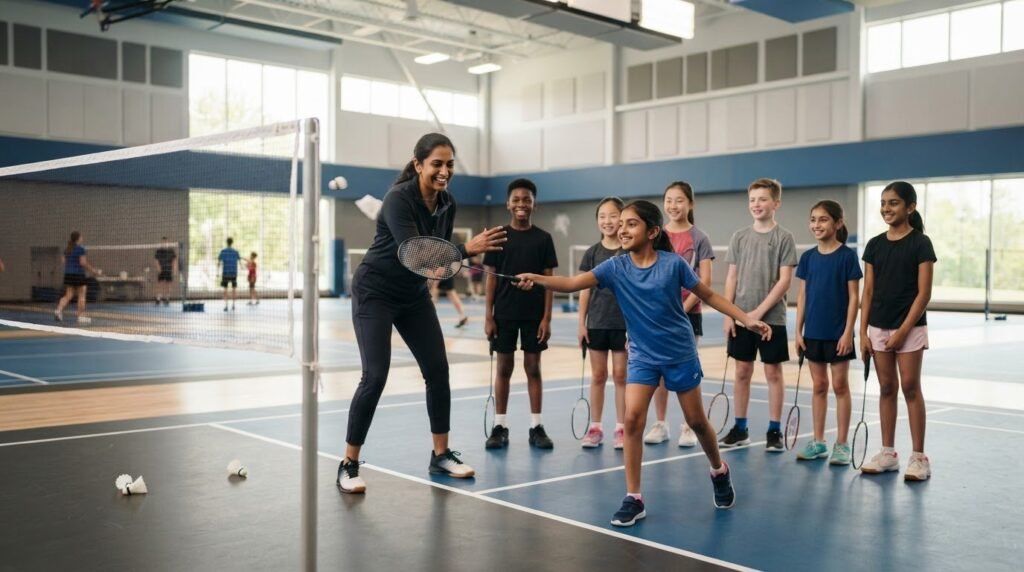
Choosing a Brampton youth badminton program is about more than finding court time. The right fit should support your child’s goals, make learning enjoyable and work with your family’s routine. To compare options, start by looking at what each format actually provides: casual play, group coaching or individual instruction.
You want your child to enjoy the game, build skills and feel welcome as they learn. Coaching, the learning environment and the practicalities of getting to training all matter. This guide explains what to look for, how to compare group and private coaching, and how to match training with your young player’s interests.
At Agility Sports in Brampton, the Agility Badminton Academy offers professional coaching through a group-based curriculum and private coaching sessions. Families in Brampton, Mississauga, Caledon and Milton can use the criteria below to consider which approach may suit their child. Start with your child’s goals, then compare the coaching format, learning focus and location.
Key Takeaways
- A Brampton youth badminton program centres on coached instruction and practice, unlike casual play or drop-in recreation.
- Compare group-based coaching and private instruction by considering the learning format and your child’s goals.
- Match goals, such as learning fundamentals or building game awareness, with the program’s stated coaching approach.
- Use a simple checklist: set a goal, compare formats, assess location and routine, then choose a next step.
- Explore the Agility Badminton Academy in Brampton for professional coaching through a group-based curriculum and private coaching sessions.
What Should Parents Expect from a Brampton Youth Badminton Program?
A youth badminton program provides organized instruction and practice to help young players develop their skills. Unlike casual family games or free drop-in recreation, coached training has a learning focus. Players receive guidance, practise skills and learn to approach rallies with purpose. For your child, a Brampton youth badminton program can provide a more structured way to explore the sport.
Structure and fun can go together. A positive session can include movement, shared play and opportunities to try new skills, while coaching gives players direction during practice. As children become more comfortable attempting skills, they may also feel more confident taking part. Progress varies with each player’s practice, experience and goals, so look for a supportive learning environment rather than a promised result.
Structured coaching or drop-in badminton: what is the difference?
Coached sessions combine instruction with practice. A coach can focus attention on a particular skill or activity, offer feedback and help players understand what they are working on. When comparing programs, look for a clear description of how coaching and practice fit together.
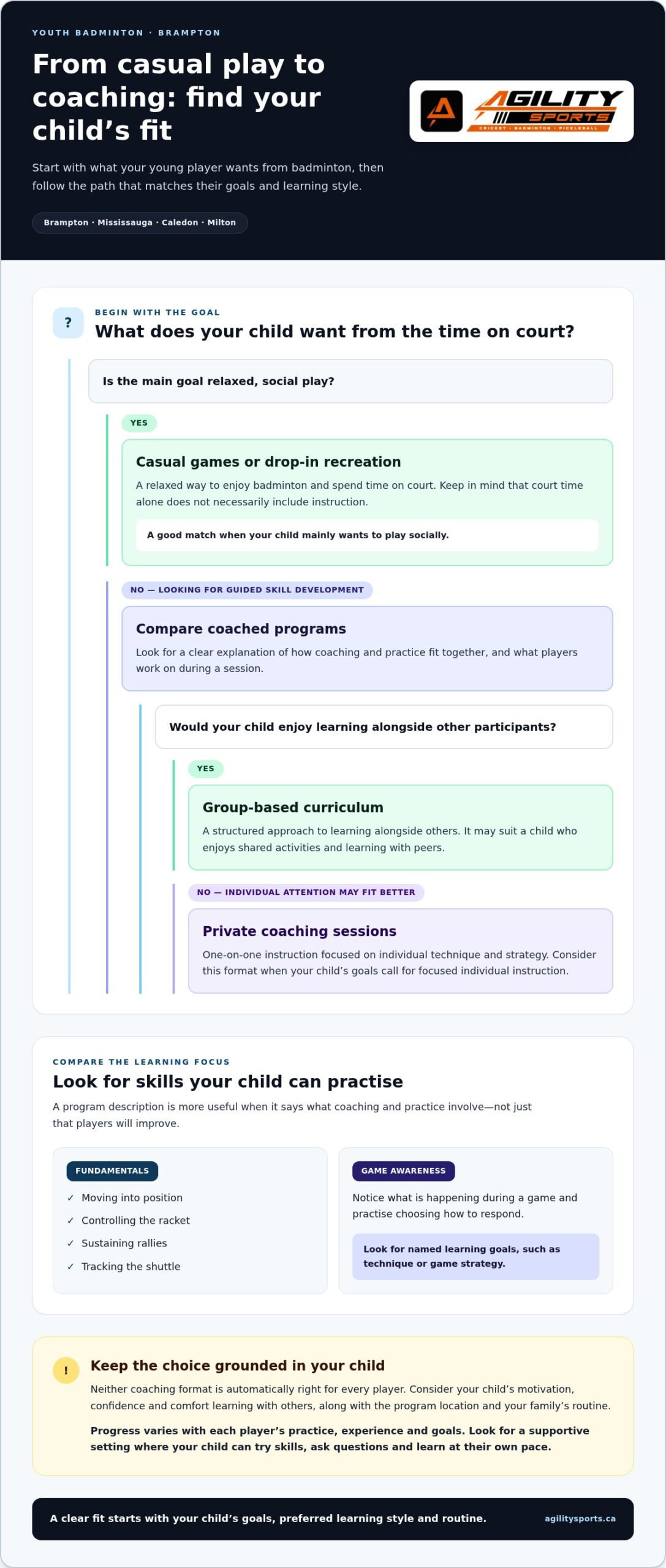
Drop-in play, including free community recreation, offers a casual way to enjoy badminton. It can be a welcoming introduction to the sport, but court time alone does not necessarily include instruction. Consider your child’s current goal: if they mainly want to play socially, drop-in recreation may be a good fit. If they want guided skill development, compare coached programs and their stated learning focus.
What can young players gain from consistent instruction?
Through coaching and practice, young players can work on fundamentals such as moving into position, controlling the racket, sustaining rallies and tracking the shuttle. They can also practise paying attention to what is happening during a game and choosing how to respond. These are useful areas to look for in a program, not guaranteed outcomes or milestones on a fixed timetable.
Consistent practice gives players opportunities to revisit skills and become more comfortable using them. Encourage effort and curiosity, not only successful shots. In a welcoming setting, your child can practise alongside others, ask questions and learn at their own pace. Enjoyment matters too: social, supportive sessions can help keep young players engaged as they develop.
- For fun and social play: Casual games or drop-in sessions offer relaxed time on court.
- For guided learning: Look for a coached format that explains its learning focus and includes practice.
- For growing confidence: Choose an environment where your child can try skills and learn at an individual pace.
Badminton is organized nationally through Badminton Canada, which offers context for the sport’s development across the country. For families in Brampton and nearby communities, the practical distinction is simple: choose casual play for recreation or explore structured coaching when your child is ready for guided skill-building. Both can be enjoyable ways to get on court.
How to Compare Youth Badminton Coaching in Brampton
Compare youth programs on three practical points: how coaching is delivered, what players learn and how well the format fits your child and family routine. These details are more useful than broad promises about results because you can assess them against your child’s needs.
Start with the program description. Does it explain the coaching format and learning focus? Can you picture what your child would be doing during a session? A Brampton youth badminton program should describe its approach clearly enough for you to compare it with your child’s goals and preferred way of learning.
| Coaching format | Learning focus to look for | Practical fit to consider |
|---|---|---|
| Group-based curriculum | A structured approach to learning alongside other participants. | Could suit a child who enjoys shared activities and learning in a group setting. |
| Private coaching sessions | One-on-one instruction focused on individual technique and strategy. | Could suit a child whose goals call for individual attention and focused instruction. |
Group coaching or private coaching sessions?
A group-based curriculum offers coached learning alongside other participants. It may appeal to a young player who enjoys shared activities and learning with peers. Private coaching sessions provide one-on-one instruction focused on individual technique and strategy. Think about the setting where your child is most likely to participate and stay engaged, then compare that preference with each program’s format. Neither option is automatically right for every player.
Which coaching details help families make a confident choice?
Look for straightforward explanations of the coaching focus, session format and intended learning. A description that names technique or game strategy gives you specific details to consider. A broad statement that a program helps players improve offers less guidance. Also weigh your child’s motivation, confidence and comfort learning with others.
Separate concrete details from claims that would need evidence. A stated group format or one-on-one structure is specific information. Promises of rapid progress, exceptional results or guaranteed confidence are not proof of what your child will experience. Practical fit matters too: consider the location and how training could fit your family’s routine. Agility Sports’ Brampton facility has advanced security monitoring, a feature to consider as part of the setting, not a guarantee of safety.
Safety and respectful conduct are worth considering in youth sport. The SafeSport in Youth Badminton resource outlines education for minor athletes and parents. It provides general background on safeguarding topics families may consider, rather than guidance on Canadian requirements.
Agility Badminton Academy offers professional coaching through a group-based curriculum and private coaching sessions. Compare those formats with your child’s goals, then explore youth badminton coaching in Brampton.
Youth Badminton Program Fit: Match Training to Your Child’s Goals
Your child’s next step depends on what they want from badminton. One player may be eager to learn the basics; another may want to sustain rallies or understand how to respond during a game. Consider a Brampton youth badminton program in light of your child’s individual goals, rather than expecting one training path to suit every young player.
Begin with a practical question: what would make your child feel that practice is worthwhile? Their answer can help you compare the program’s coaching format and learning focus with what they hope to gain. Use the table below to turn common goals into details you can look for.
| Your child’s goal | Learning focus to look for | Questions to consider |
|---|---|---|
| Learn fundamentals | Basic movement, racket control and awareness of court position. | Does the description explain how instruction supports a new learner? |
| Build consistency | Purposeful practice that gives players opportunities to repeat and apply skills. | Does the stated format match how your child likes to practise? |
| Develop game awareness | Learning to follow a rally, notice what is happening and choose a response. | Does the program describe learning beyond simply hitting the shuttle? |
For a beginner: look for welcoming fundamentals
A new player may feel more comfortable when instruction explains the basics and welcomes questions. Look for descriptions that mention movement, racket control or court awareness, rather than assuming beginners already know what to do. A supportive introduction can help your child focus on learning and enjoying the activity. Don’t assume a particular level of experience or learning pace from a general program description.
Think about which coaching format may suit your child’s comfort level. Some young players enjoy learning alongside others; others may prefer individual attention. Consider where your child is most likely to participate, stay curious and feel at ease while trying unfamiliar skills. The goal is a welcoming start, not pressure to master everything at once.
For a developing player: look for purposeful practice
A player who enjoys rallies may want to make skills more dependable or learn how to respond as play changes. Look for a stated learning focus that connects practice with using skills during rallies and game situations. A clear description can help you judge whether the training approach lines up with what your child wants to work on.
Motivation matters. Does your child enjoy repeating a skill, solving a challenge or learning with other players? Use their answer to compare the program format with their goals. Progress is personal and depends on practice; a program description should help guide your decision without suggesting guaranteed results or a particular competitive pathway.
Let your child have a voice in the choice. Identify one goal together, then compare it with the program’s coaching approach and learning focus. Goals can change as interests develop. A good fit supports your young player’s current motivation while keeping badminton enjoyable and focused on learning.
A Brampton Parent’s Checklist for Choosing Youth Badminton Training
Move from “Which program?” to a clear next step: set your child’s goal, compare coaching formats, assess your family’s routine, then choose what to explore. You don’t need to weigh every feature at once. Focus on details a program describes clearly, including its coaching approach, learning focus and location.
Questions to answer before choosing a program
Start with your young player. What would they like to learn, and what kind of setting helps them feel comfortable? They may want to build basic skills, practise with a group or receive individual instruction. These preferences can help you decide whether a group-based curriculum or private coaching sessions may suit their goals.
Next, read the program description with those goals in mind. Look for a clear explanation of the coaching format and what players are working towards. Then consider the practical fit: where is training held, and how could travelling there fit into your family’s routine? Compare locations and the routine they require without assuming specific session times or travel durations. For families in Brampton, Mississauga, Caledon and Milton, location can be a useful part of the decision.
For a closer look at training options in the city, the Brampton badminton academy guide can help you consider which coaching approach may suit your family. If you’re also weighing the playing setting, the Brampton badminton court rental guide offers facility context. Keep coaching and court rental distinct: a court booking provides space to play, while a coached program centres on instruction.
How to make the first step feel manageable
Choose one or two priorities instead of comparing every detail. You might start with a welcoming learning environment and a location that works with your routine. Talk with your child about what would make training enjoyable. Their enthusiasm matters, whether they’re excited to learn alongside others or would prefer individual instruction.
Use this short checklist to organize your decision:
- Set a goal: Name one skill or experience your child wants from badminton.
- Compare formats: Consider group-based learning and individual instruction against that goal.
- Assess logistics: Review location and how training could fit your family routine.
- Choose a next step: Explore a program whose stated coaching approach feels like a good match.
A Brampton youth badminton program is easier to assess when you know what matters to your family. Ready to take the next step? Explore youth badminton training in Brampton and see how the Agility Badminton Academy’s professional coaching options align with your child’s goals.
Explore the Agility Badminton Academy in Brampton
The Agility Badminton Academy offers Brampton families a local option for coached badminton. Its group-based curriculum and private coaching sessions provide two ways to approach learning. As you compare them, consider what would help your child feel engaged and ready to take part.
What the Agility Badminton Academy offers
The group-based curriculum may suit a young player who enjoys learning alongside others. Private coaching sessions provide one-on-one instruction focused on individual technique and strategy. Start with a goal your child has, such as working on a skill or focusing on an aspect of play. Then consider which format feels like a comfortable starting point.
Neither format has to be right for every stage. Your child’s interests and preferred way of learning can guide the choice. Focus on the type of instruction they’re keen to explore rather than assuming a particular pace or outcome.
Choose your next step for youth badminton in Brampton
Ask your child what they’re looking forward to: learning in a group, receiving individual attention or trying a coached setting. Making the decision together helps your young player feel included from the start.
Ready to explore the academy? Explore the Agility Badminton Academy in Brampton and take a positive next step towards your child’s badminton goals.
Take the Next Step on Court
Your child doesn’t need a perfect plan before getting started. A clear goal, an open mind and a welcoming place to learn can be enough to begin exploring badminton. Let your child’s interests guide the next step, and keep the focus on enjoying the process of learning and playing.
Choosing a Brampton youth badminton program is a chance to support your child’s curiosity and make space for a new activity in your family’s routine. Consider what your young player hopes to gain and whether the academy’s training approach feels like a fit. A positive first step can build excitement for time on court.
Ready to explore youth badminton training in Brampton? Explore the Agility Badminton Academy in Brampton and help your young player take their next step with confidence.
Frequently Asked Questions
Is a youth badminton program better than drop-in badminton?
Neither is automatically better; the right choice depends on what your child wants from badminton. For a Brampton youth badminton program, look for coaching that matches a goal such as learning a new skill. If your child mainly wants a relaxed game with friends, drop-in play may be a better fit. You can also start with casual play and see whether your child would enjoy more focused instruction.
What age can a child start badminton coaching in Brampton?
There isn’t one universal starting age for badminton coaching in Brampton. Program eligibility can differ, so use the program’s age guidance when deciding where to begin. Consider whether your child is interested in a coached activity and feels ready to take part. Readiness is individual; a child doesn’t need advanced skills to start exploring badminton instruction.
Can beginners join a youth badminton program?
Beginners can explore youth coaching, but programs may describe their intended participants differently. Look for clear guidance about the experience level the instruction suits. A new player may appreciate simple explanations and a setting where asking questions feels comfortable. Talk with your child about what they’d like to learn, then compare that goal with the program’s description.
How often should a child attend badminton coaching?
There’s no single attendance schedule that works for every child. Consider their interest, school commitments, other activities and the program’s published session options. A manageable routine can help your child stay engaged without making sport feel like another source of pressure. Once they start, notice whether they look forward to sessions and have room to rest and enjoy other parts of family life.
What should my child bring to a badminton program?
Follow the program’s preparation guidance, since equipment expectations can vary. As a starting point, plan comfortable sports clothing and suitable indoor footwear, then check whether your child needs a racket or other items. Don’t assume equipment is provided. Reviewing the instructions before the first session can help your child arrive prepared and ready to join in.
Is private badminton coaching better than group coaching for kids?
Neither format is best for every child. Think about how your young player responds to learning with others compared with receiving individual attention. A child who enjoys shared activities may prefer a group setting, while another may feel more comfortable focusing on personal goals one-on-one. Choose the coaching approach that fits your child’s current needs and helps them stay engaged.
How can parents help a child improve at badminton?
Show interest in what your child is learning, not just the score of a game. After a session, ask what felt fun or what they’d like to practise next. Let your child set the pace for extra play, and celebrate effort, curiosity and persistence. This keeps badminton a positive shared experience while giving your young player space to develop.