
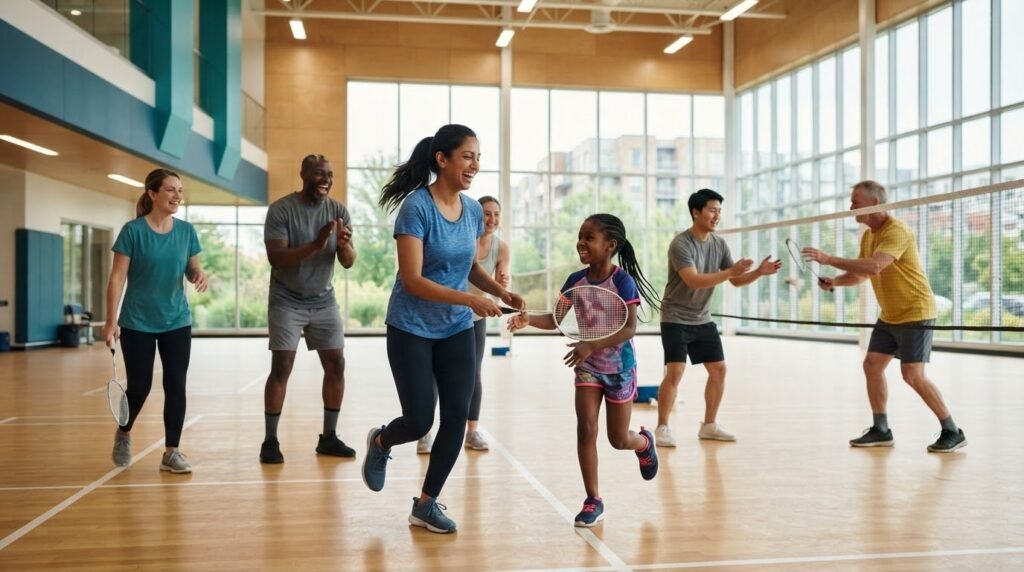
The best athletic team-building activities in Brampton match your group’s goals, comfort level and event plans. Choose an activity everyone can take part in, whether you want to build communication, encourage collaboration or simply enjoy time together. A good fit matters more than choosing the most competitive option.
You want an event that feels fun, welcoming and worthwhile for the whole group. Compare activities by objective, consider how to include different participants, and plan around your group’s needs. Matching your goals to the right setting and format helps your team focus on participating, learning and building stronger connections.
Key Takeaways
- Start with your group’s goal, then choose an activity that gives everyone a comfortable way to participate.
- Plan the format around your team’s experience, interests and event schedule to keep the session focused and enjoyable.
- For weekday events in Mississauga and the GTA, book four to six weeks ahead; Friday evening and weekend events call for eight weeks or more.
- Match corporate and youth groups with activities suited to their different needs, from team communication to skill-building and shared fun.
- Compare indoor options such as badminton, cricket and baseball batting to find a setting that fits your group’s objectives.
Customising activities to group goals
Start by naming the change you want your Brampton group to experience. A corporate team focused on communication needs a different challenge than a youth group practising cooperation. Choose one main goal, such as listening, shared problem-solving or confidence, then select an activity that puts that behaviour into practice. A paired challenge can encourage clear instructions, while a team relay can prompt planning and supportive handoffs. Let the goal guide the activity, not just the final score.
Next, consider participants’ comfort and experience. Account for age, mobility, familiarity with sports and whether anyone may prefer a lower-pressure role. Rope games can offer a shared challenge: a guide from Európai Unió says children with mental disabilities can easily take part. Adapt participation through clear instructions, varied roles and a pace that lets everyone contribute. A parent organizing a youth event can share helpful context about participants’ interests and needs.
Turn the objective into a simple event plan. Note the activity style, expected attendance, available time and any equipment or facilitation needs. A group choosing a racquet sport, for example, may benefit from a brief welcome and time to practise before play. Decide who will explain instructions, organize teams and guide transitions. These details help everyone join in and keep the activity connected to the group’s goal.
Shape the format around the group’s size and how you want people to interact. Smaller teams can rotate through activity stations, while a larger gathering can split into groups for short rounds. A round-robin gives teams repeated chances to play; a knockout can move quickly but may leave participants waiting after an early loss. Choose a structure that keeps people engaged and supports your purpose, whether that’s friendly competition or shared problem-solving.
For a non-profit or community group, make the activity serve the gathering’s purpose. A volunteer team might choose a cooperative challenge that encourages communication, while a youth organization may prefer a skills-based session with supportive roles. Identify what participants should gain from the experience. Build the plan around inclusion, group energy and how people will take part, rather than assuming everyone wants the same level of competition.
Before finalizing, check whether the activity supports your goal, accommodates different skill levels and suits your attendance and event time. A team seeking stronger communication might choose rotating pairs, while a group focused on shared achievement could use cooperative scoring. This quick review helps you choose athletic team-building activities in Brampton that feel purposeful, welcoming and enjoyable for everyone.
Event coordination and planning
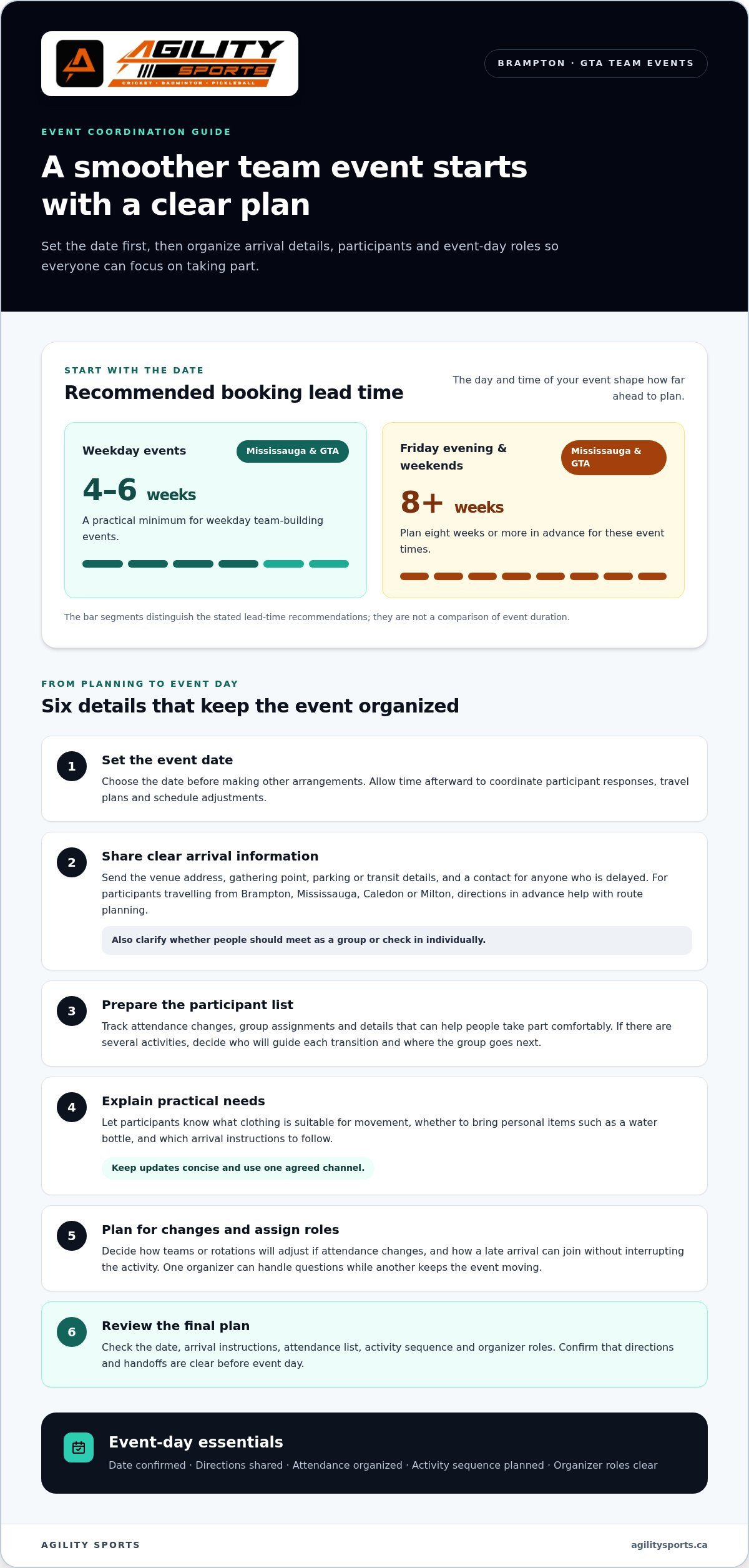
Set the event date before other arrangements, especially for a popular time slot. For weekday team-building events in Mississauga and the GTA, booking four to six weeks in advance is a practical minimum. For Friday evening and weekend events in Mississauga and the GTA, eight weeks or more in advance is recommended. Once you’ve chosen a date, allow time to coordinate participant responses, travel plans and any schedule adjustments.
Give participants clear arrival information. Share the venue address, gathering point, parking or transit details and who to contact if someone is delayed. For groups travelling from Brampton, Mississauga, Caledon or Milton, sending directions in advance helps everyone plan their route. If participants are arriving separately, say whether they should meet as a group or check in individually.
Prepare a participant list and use it to organize the event-day welcome. Note attendance changes, group assignments and any details that will help people take part comfortably. If the event includes several activities, decide who will guide each transition and where participants should go next. Clear handoffs prevent confusion and keep the group focused on the shared experience.
Think through practical needs before event day. Tell participants what clothing is suitable for movement and whether to bring personal items, such as a water bottle. Share any arrival instructions they need to follow. Keep messages concise and send updates through one agreed channel to avoid conflicting details.
Plan for common changes. If attendance shifts, decide how to adjust teams or rotate participants. If someone arrives late, have a simple way to bring them into the activity without interrupting others. Assign one organizer to handle questions while another keeps the event moving. These roles are especially useful when colleagues, guests or participants unfamiliar with one another are taking part.
Before the event, review the date, arrival instructions, attendance list, activity sequence and organizer roles. Use this final check to catch missing directions or unclear handoffs. A prepared plan gives participants the information they need and lets organizers focus on a smooth, welcoming experience. For a Brampton gathering, explore local sports event options that fit your plans.
Team-building benefits
Accessible, beginner-friendly options in Brampton include casual badminton and pickleball, with simplified play and flexible roles. Participants can learn the basic rhythm before taking part in a group activity, making these sports approachable for newcomers.
A shared activity gives coworkers a common reference point beyond daily tasks. During a game, a team can notice how people respond when plans change. Someone might suggest a new approach, while another spots a detail others missed. These observations help colleagues recognize strengths that may not show up in meetings and give them examples to draw on in future projects.
Sports can reveal different leadership styles without assigning formal titles. During a team challenge, one person may organize the next move, while another keeps the group focused or encourages quieter participants. Switching roles gives people a chance to contribute in new ways. A workplace team can use these observations to recognize contributions beyond those of the most vocal person or the most senior colleague.
For beginners, visible progress can build confidence. Learning a badminton serve or a pickleball rule gives participants a clear step forward during the session. Keep the learning task manageable and acknowledge effort as well as successful attempts. This helps newcomers engage without prior experience and gives experienced players a chance to practise patience and encouragement.
A well-planned group activity can foster belonging. Invite participants to join in through different roles, such as organizing a rotation or encouraging teammates. These options let people contribute in ways that suit their comfort and ability. For a community group in Brampton, welcoming participation helps new members connect instead of feeling that athletic skill is the only way to belong.
Make the benefit last beyond the event by choosing one practical follow-up. A manager might invite colleagues to apply a successful approach from the activity at their next project check-in. A youth leader could recognize a participant who helped a teammate feel included. Keep the follow-up specific to what the group experienced. Connecting the session to everyday interactions makes it relevant beyond the playing space.
To assess whether the activity met its purpose, ask participants to share one observation about the group dynamic. Did someone new take initiative, or did teammates make room for different voices? Use the responses to shape a future activity or team discussion. This feedback helps organizers plan and lets participants notice their group’s progress.
Choosing activities by team-building objective
Choose the behaviour you want your team to practise, then match the activity to it. For communication, try a badminton rally where partners call each shot before returning it. For collaborative planning, use a small-group challenge that requires participants to agree on an approach. Make the target behaviour visible so the group can recognize it during play and discuss it afterwards.
If your goal is trust, give teammates a shared task with clear roles. A cricket practice challenge could pair a batter with a teammate tracking targets and offering encouragement. Switch roles so each person contributes in a different way. Keep the focus on supporting one another, not judging skill. This gives participants a practical reason to communicate and helps make the activity welcoming for different experience levels.
To build connections, choose an activity that mixes people who don’t usually work together. A pickleball rotation can pair colleagues from different departments, while friendly doubles encourages quick conversation and coordination. In an Ontario workplace, intentional mixing can help create the team culture you want. Explain why partners are changing, and invite participants to learn something new about each teammate.
To build confidence, start with practice before adding a challenge. A group might begin with simple baseball batting practice, then set a shared target for the next round. Focus on participation and steady skill development, not comparing beginners with experienced players. Supportive roles, such as tracking attempts or cheering for another group, give everyone a way to contribute while learning a new sport.
For energy and friendly competition, choose a format with short rounds and clear scoring. Teams can rotate through badminton, pickleball or cricket activities, then regroup to share a tactic that worked. Keep rules simple and explain them before play. A dynamic schedule can maintain engagement, but leave time for questions and for participants to settle into each activity. This balance keeps competition lively without making the event intimidating.
Use these steps to make the final choice:
- Name the objective: Pick one priority, such as trust, communication or confidence.
- Select the behaviour: Decide what participants should practise, such as calling a play or sharing roles.
- Match the format: Choose a cooperative challenge, rotating pairs or friendly tournament.
- Review the experience: Ask whether beginners can participate and whether the activity supports your team culture.
A clear objective keeps your activity purposeful. Choose a format that lets your Brampton group practise the skill together, then make time to connect the experience with everyday teamwork.
Which Brampton team-building activities are suitable for corporate groups versus youth teams?
Corporate groups often benefit from activities that connect directly to workplace collaboration. Badminton doubles can encourage partners to call shots, adjust positions and support each other between rallies. Rotating partners gives colleagues from different departments a chance to connect beyond familiar work teams. Set a clear objective, such as practising communication or building rapport, then discuss what helped each pair work together.
Youth teams need an active format that makes learning and participation rewarding. A beginner-friendly badminton rally or cooperative pickleball game can focus on trying new skills rather than ranking players. Use short demonstrations, simple rules and encouraging feedback. Give participants different ways to contribute, such as playing, keeping score or cheering for teammates. This makes the event more welcoming for young people with varied experience.
Match the challenge to the group’s experience and the event’s purpose. A corporate team that knows each other may enjoy a friendly tournament, while a new team might benefit more from mixed pairs and shared goals. For youth participants, include practice before competition. Parents and organizers can explain the activity plan and participation expectations ahead of time.
Use these considerations to shape the format:
- Corporate groups: Choose activities that prompt colleagues to communicate, rotate roles or solve a shared challenge.
- Youth teams: Prioritize clear demonstrations, skill practice and positive encouragement.
- Mixed experience: Offer beginner and experienced participants meaningful roles within the same activity.
- Group energy: Use friendly competition for a lively event, or cooperative scoring when shared achievement matters most.
For any group, explain how the session will flow before play begins. Tell corporate participants whether they’ll work with familiar colleagues or new partners. For youth groups, make instructions easy to follow and show how to pause or ask for help. A clear welcome, organized transitions and supportive coaching keep the focus on fun, skill development and community.
Indoor activities can also help organizers plan around changing weather in Brampton. Consider the group’s comfort, mobility and familiarity with the sport before choosing a format. A high-energy tournament may suit colleagues looking for friendly competition, while a skills-based session can help young players build confidence. The best fit gives everyone a genuine way to join in.
Planning for a corporate group? Explore corporate event options and shape an active gathering around your team’s goals.
Agility Sports: Agility Badminton Academy
Agility Sports can help your group turn its goals into an active session. The Agility Badminton Academy offers structured badminton coaching, while Badminton Court Rental suits groups looking to play together. Teams interested in other sports can choose Cricket Lane Rental or Baseball Batting Cage Rental.
Choose the format that fits your group’s experience and objective. A court session can encourage communication and friendly play, while coaching can support skill development. Share your event goals and preferred activity with Agility Sports as you plan. For an athletic team-building activity in Brampton, contact the team to discuss your group’s plans.
Make your next team event count
Give your group a shared experience that carries beyond the court. Choose one skill or connection you want participants to take into their next practice, meeting or team activity. Let that goal shape how you bring everyone together. The best athletic team-building activities in Brampton can spark stronger communication, new skills and positive group memories.
Agility Sports offers the Agility Badminton Academy, Badminton Court Rental and Cricket Lane Rental, giving your group options for coaching or active play. Share your event’s purpose and preferred activity when you reach out to plan your next step.
Contact Agility Sports to plan your event and start creating an active, welcoming experience for your team. Bring your group together, get moving and enjoy the momentum you build.
Frequently Asked Questions
What Are the Best Team-Building Activities in Brampton?
The best athletic team-building activities in Brampton suit your group’s goals and experience. Badminton and pickleball bring participants together through shared play, while cricket lanes or batting cages offer focused sports challenges. Coaching can add a skill-building element for groups seeking instruction. Choose an activity that gives everyone a clear way to join in, whether they’re playing, learning or cheering on teammates.
Can you do indoor, outdoor, virtual, or hybrid events?
These formats are possible as different event concepts, but an athletic session needs a suitable activity and setting. Indoor sports work well for groups seeking active, face-to-face participation; virtual formats can centre on remote challenges or discussion. A hybrid plan can connect in-person play with remote team participation. For an indoor Brampton sports event, choose activities that let participants interact directly and adapt the format to the group’s needs.
What athletic team-building activities are available in Brampton, Ontario?
Brampton groups can choose indoor badminton, pickleball, cricket practice, and baseball or softball batting activities. Each offers a different way to participate: court games encourage shared play, while batting sessions focus on individual attempts within a group outing. Consider whether your team wants casual recreation, coached skill development or friendly competition. The choice helps shape the event’s pace and how participants connect.
Which Brampton sports facilities offer team-building programs for groups?
Agility Sports offers indoor sports options and Corporate Event Packages for groups in Brampton. Depending on your event’s focus, badminton, pickleball, cricket lane or batting cage activities can provide an active setting. The Agility Badminton Academy can support groups aiming to develop badminton skills. Choose based on the sport participants want to try and the shared experience you’re planning.
What outdoor team sports and fitness challenges can teams do in Brampton?
Outdoor groups can try a relay, walking challenge or passing-based team game, depending on participants’ interests and abilities. These formats encourage communication without requiring advanced sports skills. Set a simple shared goal, assign roles and keep participation flexible. Agility Sports focuses on indoor sports, so treat outdoor formats as a separate event idea rather than a facility session.
What indoor athletic team-building activities are available in Brampton during winter?
Indoor options for winter in Brampton include badminton, pickleball, cricket lane practice and baseball or softball batting cage activities. The indoor setting lets your group keep moving without planning around outdoor conditions. For a social event, try court play with changing partners; for skill practice, focus on one sport and give participants time to learn its basics. Choose a format that suits your group’s interests and comfort levels.
How much do team sports and athletic group activities cost in Brampton?
Plan your event budget around the activity, booking format and what your group wants to include. A court gathering, cricket lane session and batting activity each involve a different facility setup. Outline the sport, event format and expected attendance, then request an event quote from Agility Sports. This gives you an estimate based on your specific plan rather than a generic figure.
What group sizes and age ranges do Brampton team-building venues accommodate?
Suitable group size depends on the activity, available space and how participants will take turns. Agility Sports welcomes recreational and competitive players of all ages and skill levels. For a mixed-age group, choose activities that let beginners and experienced participants contribute, such as rotating between playing and supportive roles. Share your group’s age range and event format when planning to help tailor the session to your participants.